Film, food and propaganda
My animated film Akamaru monogatari took four years. It started as a university assignment, premiered at the EXIT festival in 2009 and travelled to festivals; I learned 2D and 3D animation on it. Then I branded the Foody! restaurants, retro American diners in Novi Sad with old cooking films on their screens, and photographed their food in a studio across from the cathedral.
Around 2009 I also started Propaganda Department, stickers and street art in the key of Orwell's 1984. "It's the longest ongoing project I have ever made." For a while I was art director at Massetehnic, for Sprint Scooters and MassWine, and all along I leaned to digital work.
Apps and teams
A video I made brought me work for CounterPath and my first real app interfaces for Android and iOS, in the days of nine-patch images, before Material Design. Then Vivify Ideas, where four or five years of every kind of project "baked the craft" into me, and where I first led other designers. At Symphony I was the first designer in the Novi Sad office, and I have led design teams there since. On the side I mentored designers at Designlab and ran NeutronField, a marketplace for image prompts.
How I came to generative AI
I was always drawn to generation: patterns made from a few settings, or worlds like No Man's Sky, where a planet only exists once you land on it. In 2020 I trained a model on Runway with thousands of UFO pictures, to post a new, believable UFO photo every day until no UFO photo meant anything anymore.
When text-to-image arrived in 2021 it was, to me, "on the level of magic". Writing a prompt that gave you the picture you meant was hard, and people kept their prompts to themselves. So I built a public place where prompts were made in the open: NeutronField. Prompting was its own craft then. Every word had a weight, and "red" would swallow "brick" unless you turned it down. NeutronField closed in 2024, when Midjourney opened everyone's prompts.
Is it art?
The hosts pushed on this, and the episode carries the argument. My answer: AI is a crutch the way photography was for painting, the way a camera obscura was for Vermeer. It is a tool, like the pencil sharpener: "How much did the pencil sharpener shape the history of art?"
Where it changes the work is ideation. A painter can give it a palette and earlier work, ask for thirty sketches for a new series, keep what speaks to them and paint the rest by hand. It shortens the part of the process that used to take weeks of sketching.
Three logo contests
I took the brief pages from LogoTournament.com, a design-contest site I joined ten years ago, and gave them to ChatGPT. Within a month my versions were ranked first in three contests, and one client chose the logo. One of those logos is Sharp Iron Society. My line on it: "Someone who uses AI will take your job."
How a Neusatz film is made
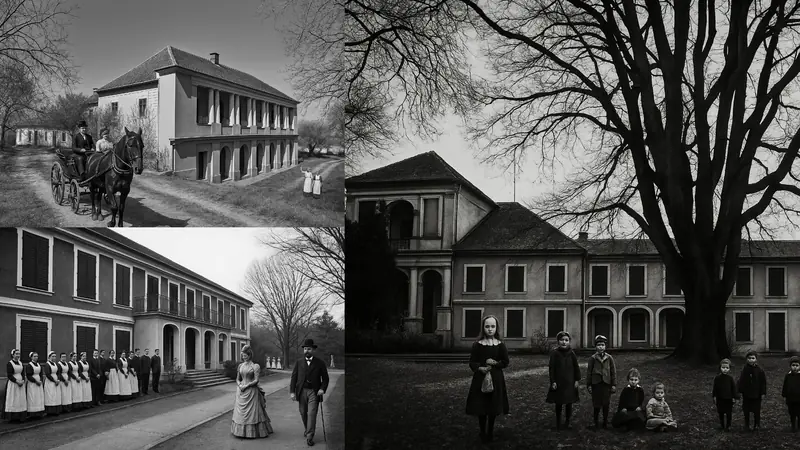
I described my process on Neusatz. Deep research comes first, through Perplexity or ChatGPT, and then I fill the gaps in the story: for one episode, the witch trials in Szeged in 1728, told beside what was happening in Neusatz that same summer. The script goes to a narrator voice I designed, English with an Austrian accent. From the finished audio I build a storyboard scene by scene, then render each scene with the best video model of the moment, Veo 3.1 when we recorded. For The Almaška Church I took today's photographs, removed the air conditioners and new buildings, and put back Novi Sad of the 1800s.
"I don't know how to find actors, do make-up or scout locations. And now I can have a fifteen-minute episode in three days." That is why I see AI as an amplifier of what you can do. It replaces you only if your whole job was carrying out someone else's vision.
The future of the work
People who care about their craft will be fine. What disappears is work that is easy to replace, "the way typists vanished when the photocopier came".
What they said
The hosts closed by calling my site a notebook of everything I have ever made, and said that what I build are "more worlds than projects".