Overview
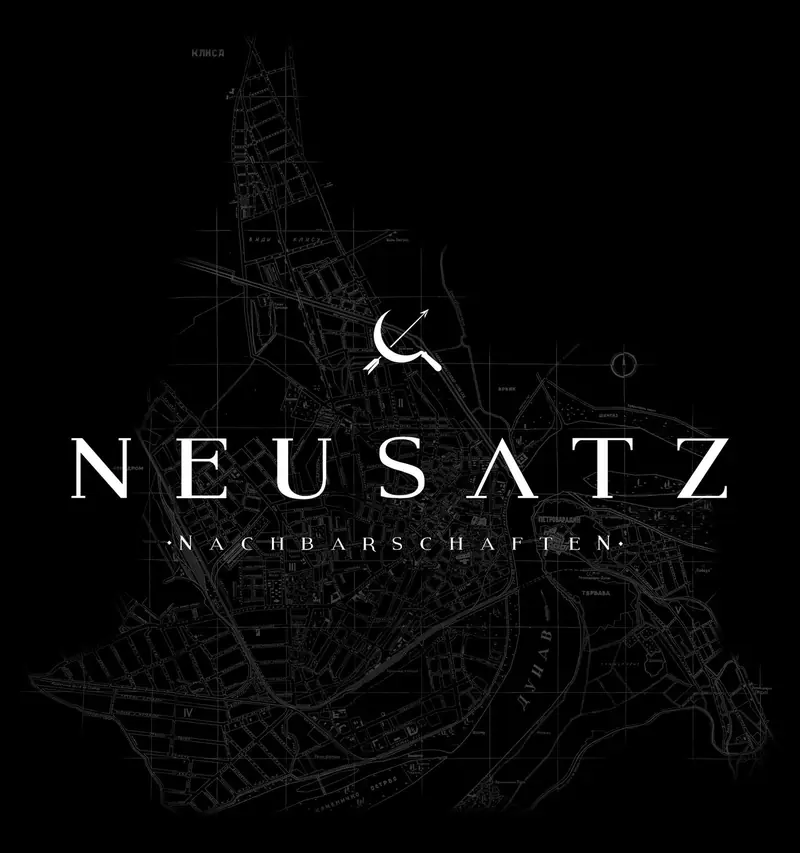
I conceived and designed Neusatz, a world-building project that retells Novi Sad as a city of crests, crews and legends. It began in 2015 with heraldry for the city's neighbourhoods. Today it is a website written as an unofficial guidebook to the city, with twelve boroughs, fourteen curiosities, thirteen stories of lore and eight crews, plus a timeline and a map. The streets, dates and buildings are real. The menace is a thin layer laid over them, and the footer of every page says plainly that the whole thing is fiction. Its factual side is the Neusatz Archive.
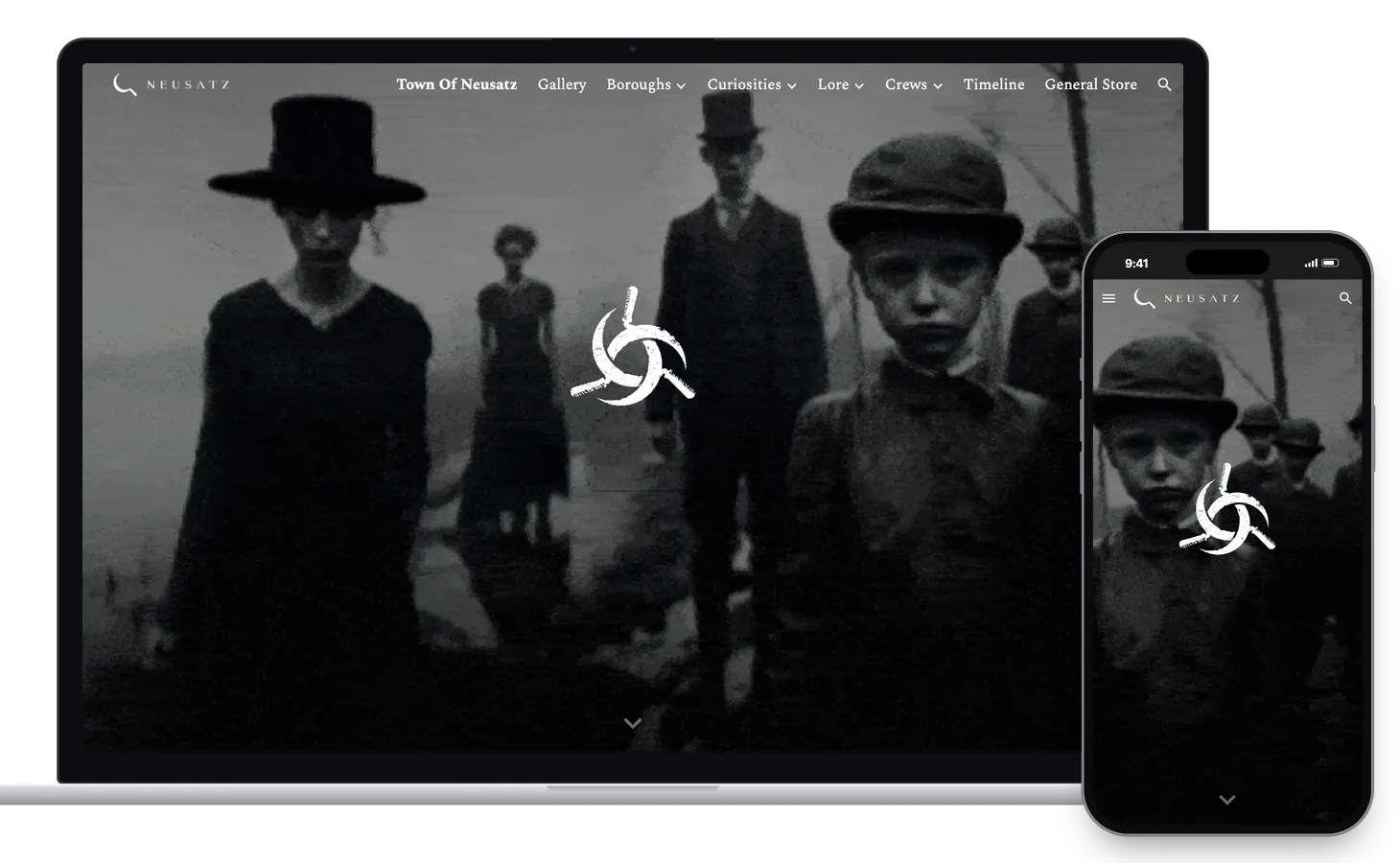
The home page on a laptop and a phone: an animated black and white scene under the Neusatz mark.
It started with a crest for every neighbourhood
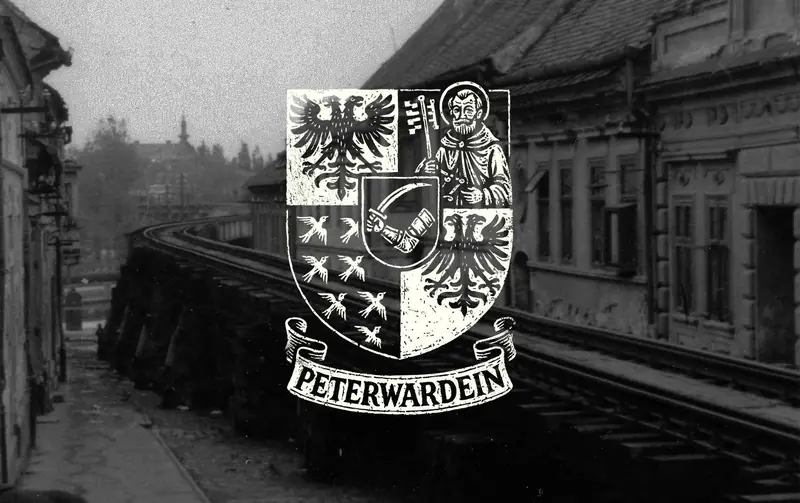
In 2015 I set out to design heraldry for every significant neighbourhood of Novi Sad. I wanted crests that would outlast a passing fashion and stay with the people who live there.
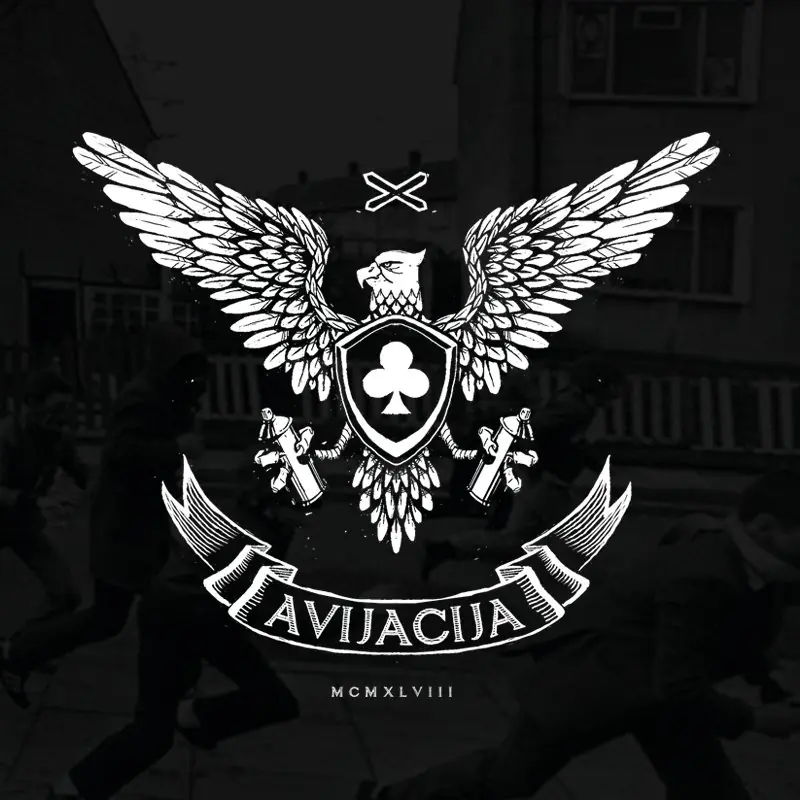
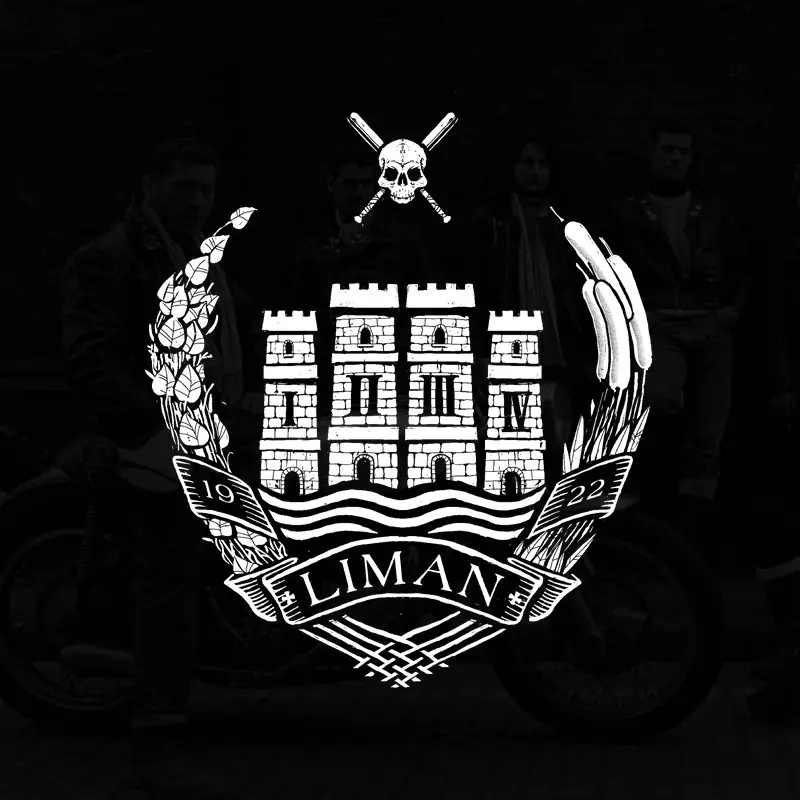
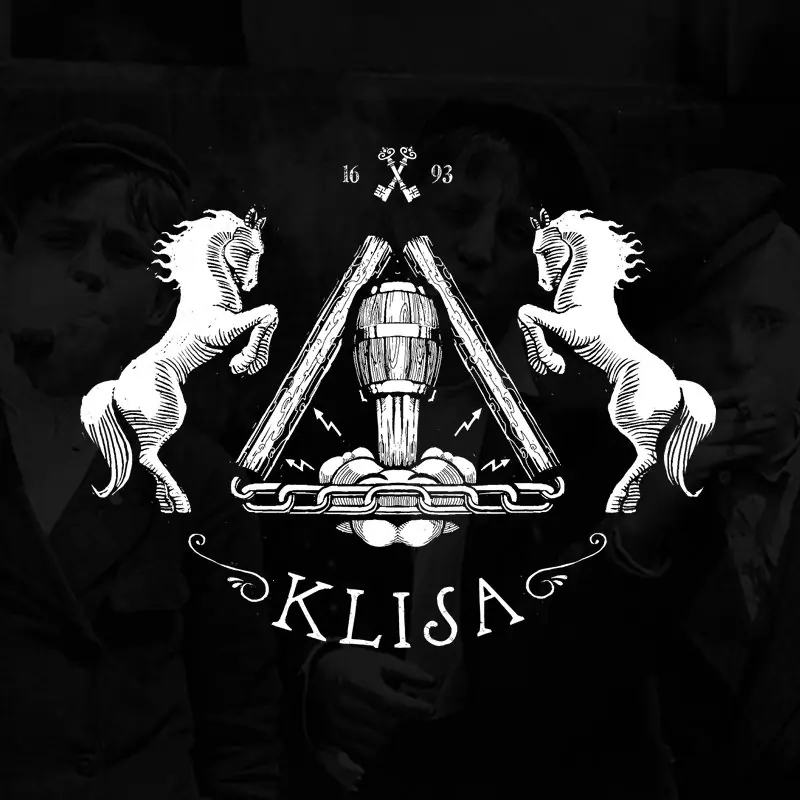
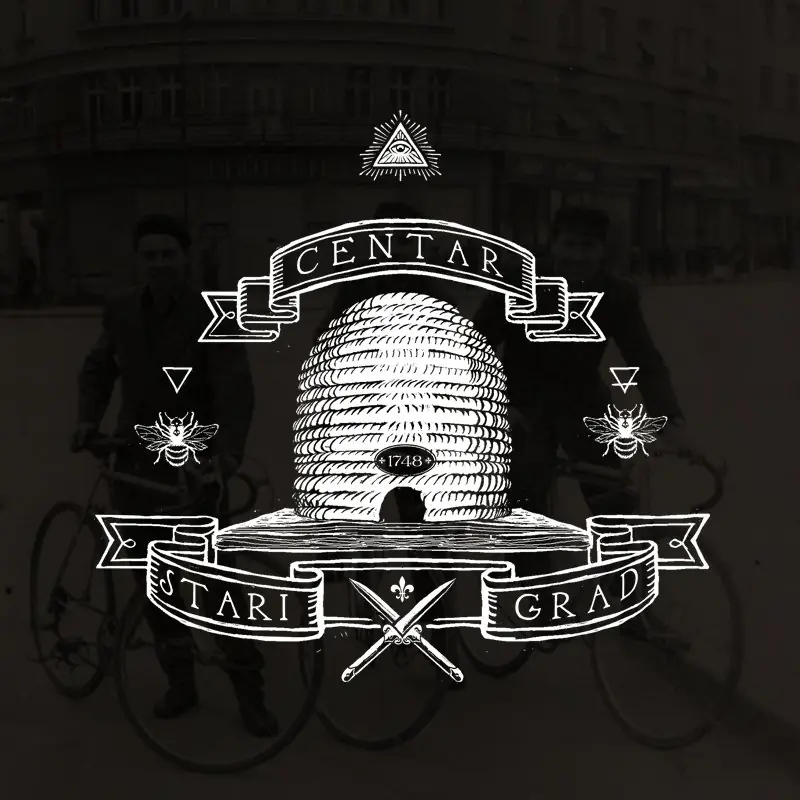
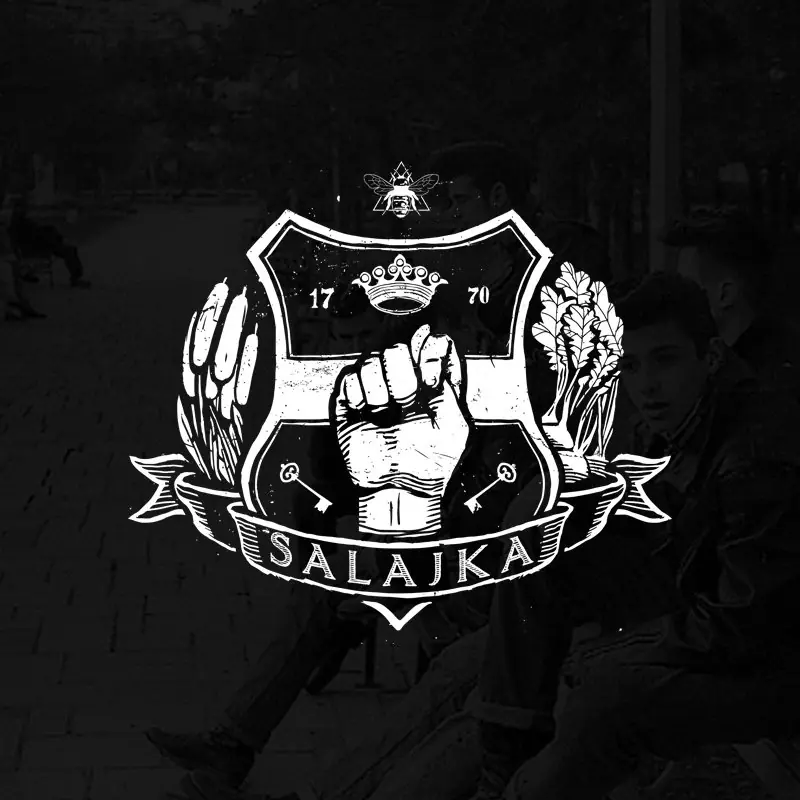
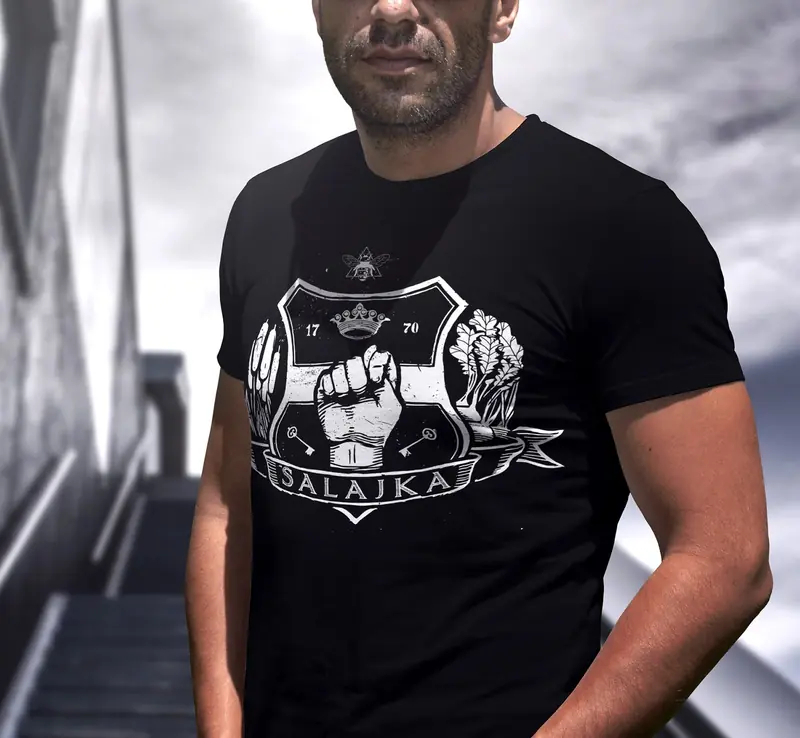
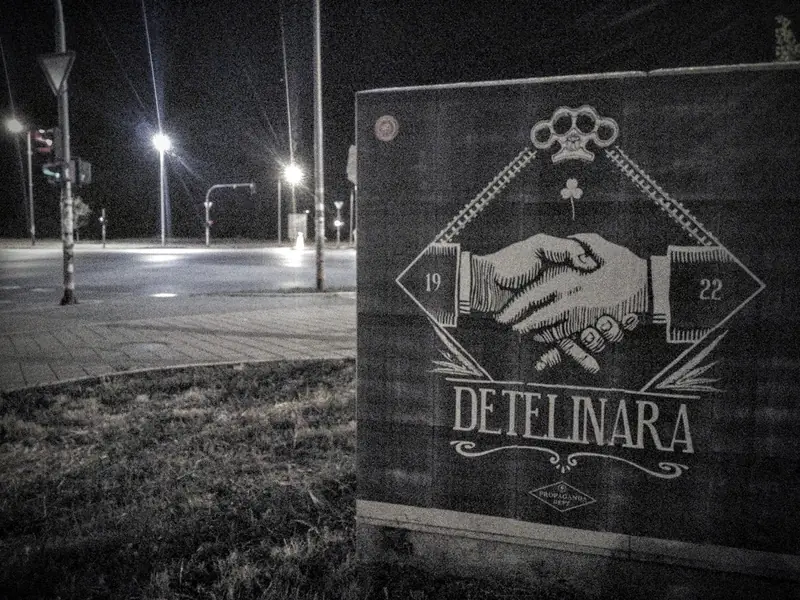
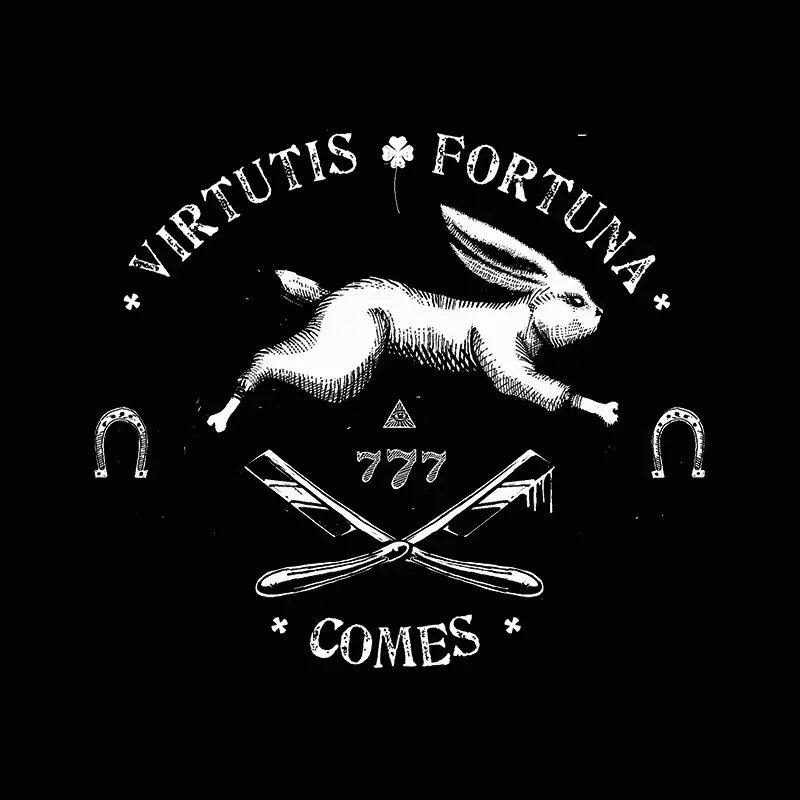
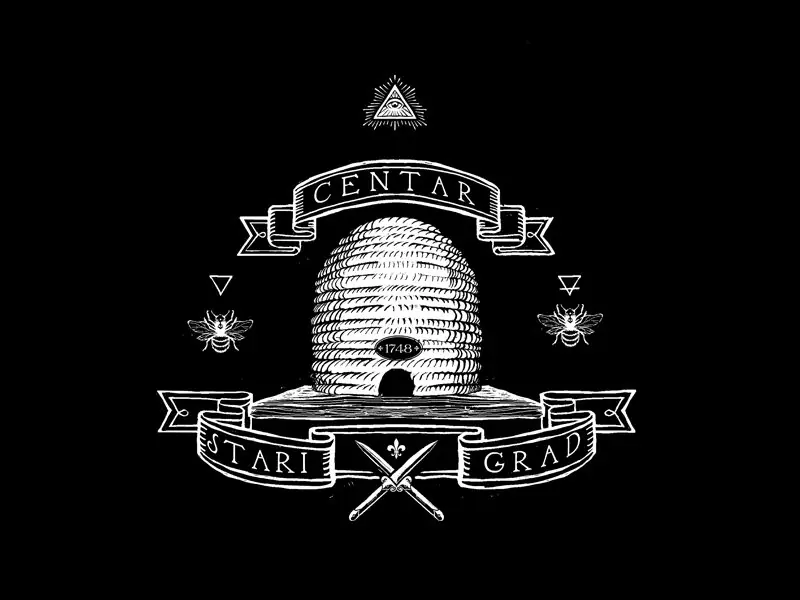
The crests draw loosely on Freemason insignia and on the signs of American gangs from the 1920s to the 1950s. The pairing has a reason. People lived on this ground in Neolithic times, but the city's modern neighbourhoods rose in the twentieth century. So their crests carry twentieth-century things: spray cans, razor blades, brass knuckles, nunchaku.
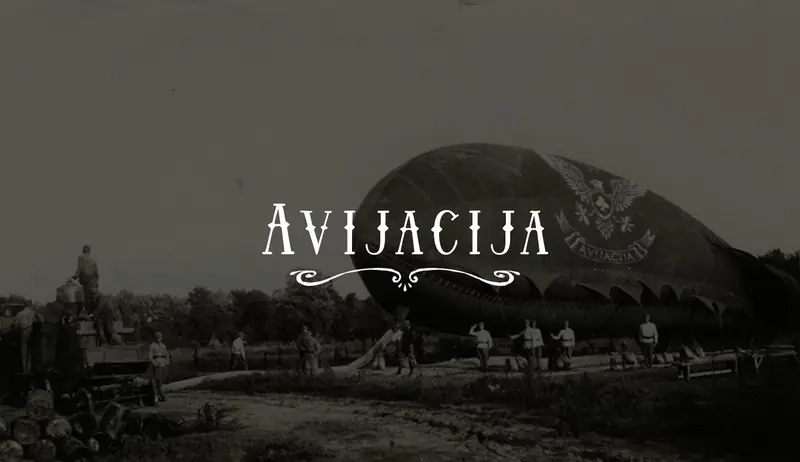
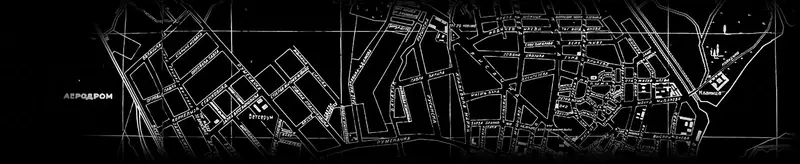
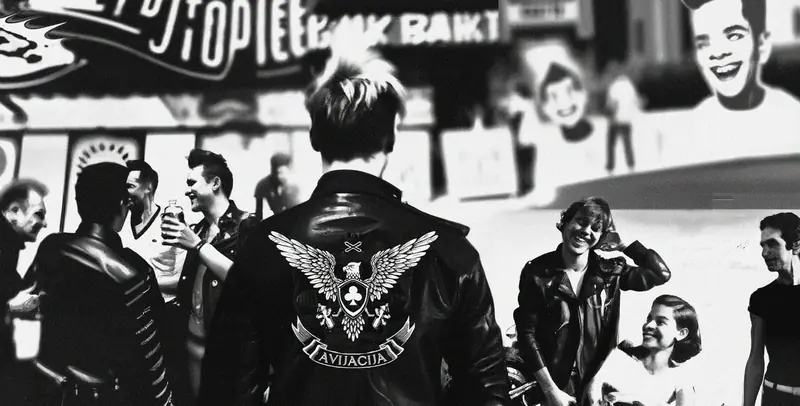
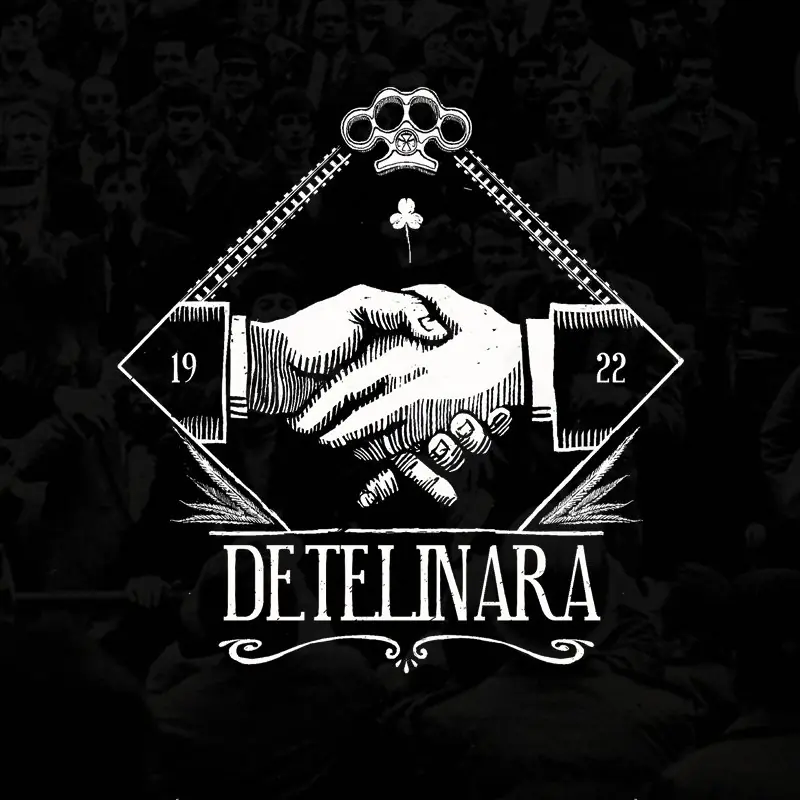
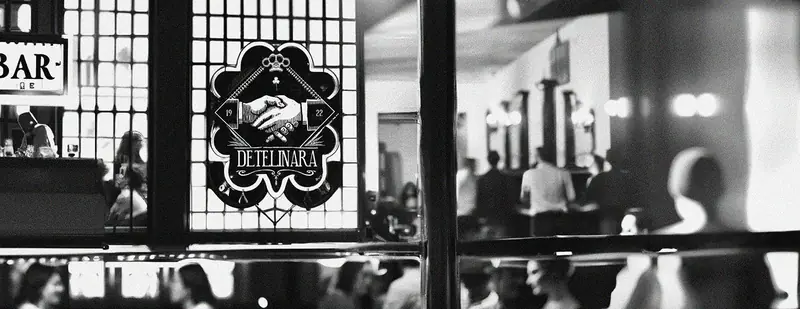
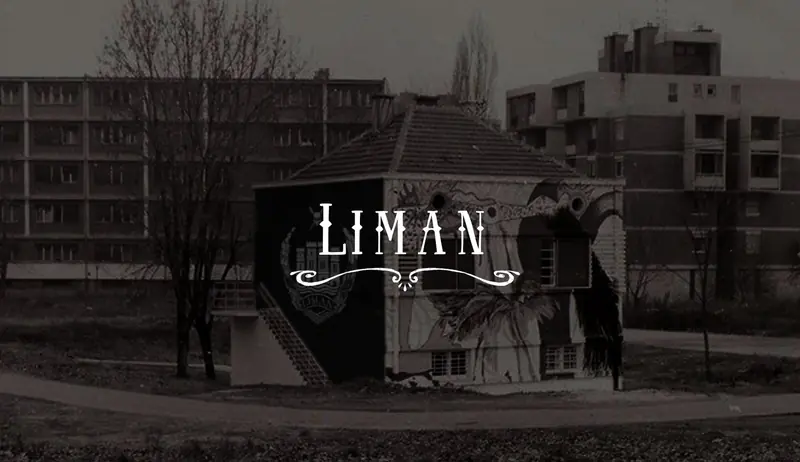
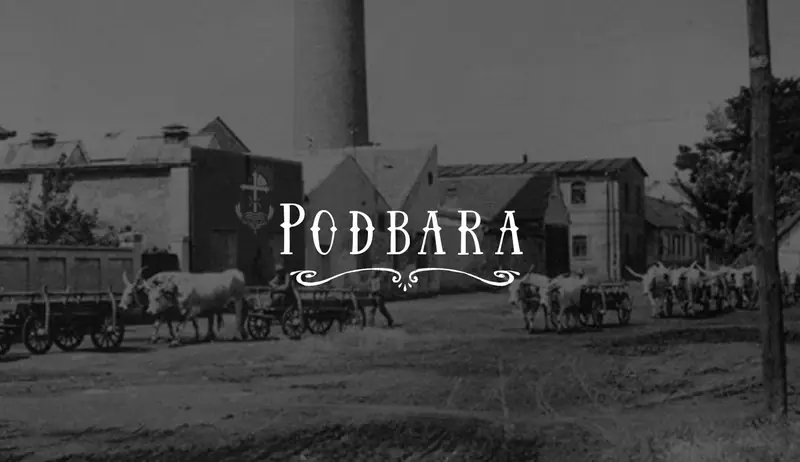
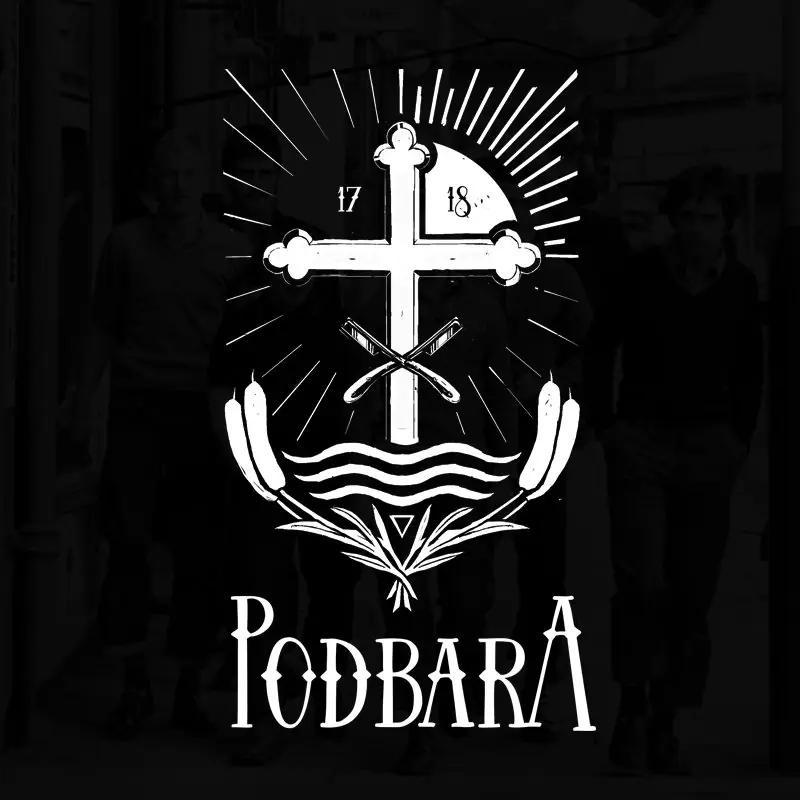
The crests carry founding years: 1693 for Klisa, 1718 for Podbara, 1922 for Liman and Detelinara. Avijacija's reads MCMXLVIII. Building there began in 1948, and the settlement is named after the road to Majevica, once the largest military airport in the Kingdom of Yugoslavia.
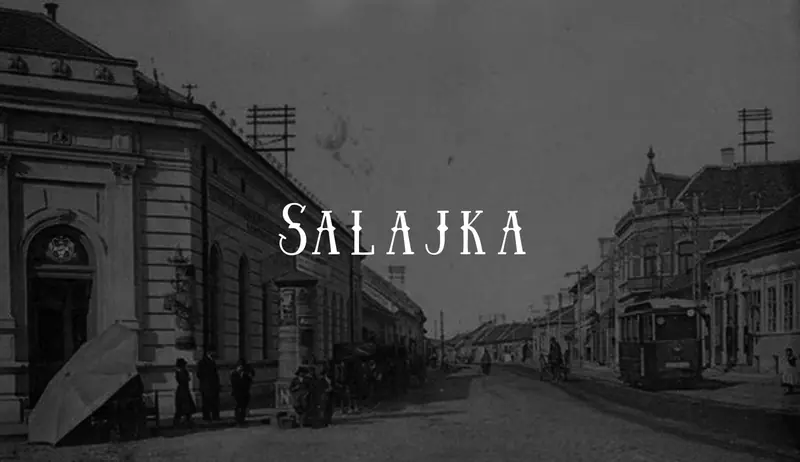
The Boroughs page: twelve crests, one for each borough of Neusatz.
From crests to a guidebook
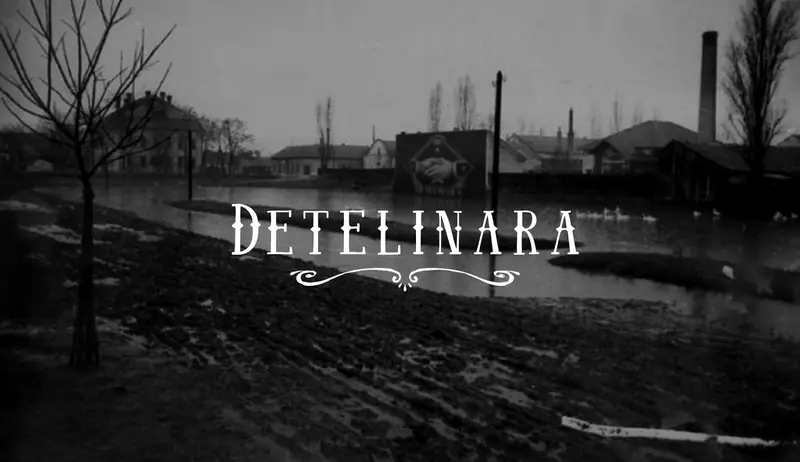
The crests grew into a fiction site. Neusatz is written as an unofficial guidebook to the city, issued by its Propaganda Department. The narrator grew up here, gets every date and street right, and passes on the town's rumours without vouching for them. Neighbourhoods are written up as small states, such as the State of Liman and the Kingdom of Detelinara, and a teenage crew is described as gravely as a medieval order.
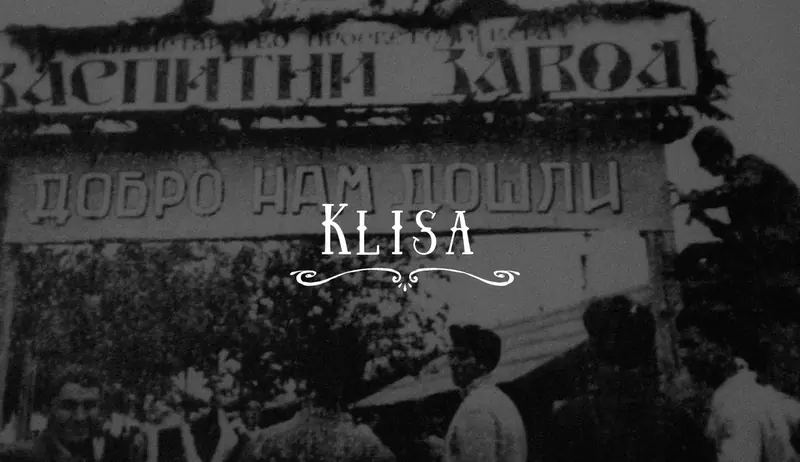
Places carry the names of the empires that held them. Each page title uses the world name, respelt the way a German or English clerk would write it: Rotkvarija becomes Rotkvariya, Salajka becomes Zalayka and Sremska Kamenica becomes Kamenitz. The oldest layer is Latin, so Klisa is Ecclesia.
What the site holds
- Boroughs. Twelve neighbourhoods, each with its crest and its story, from Peterwardein under the fortress to the State of Liman.
- Curiosities. Fourteen real places, from Petrovaradin Fortress and the marshalling yard to a hat shop founded in 1927.
- Lore. Thirteen stories, from the Battle of Petrovaradin in 1716 and the witch-hunt fear of 1728 to the town's feral dogs.
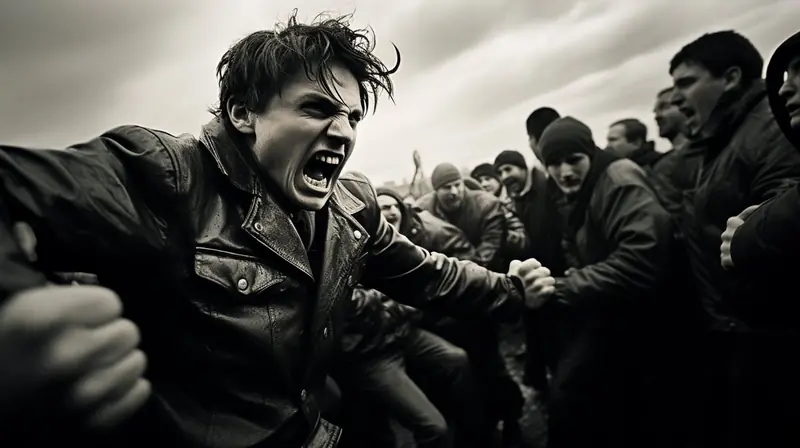
- Crews. Eight gangs, written up like orders. Korida and the Coyotes support different football clubs and feud with each other. The Pigeons of Liberty Square are musicians and watchers.
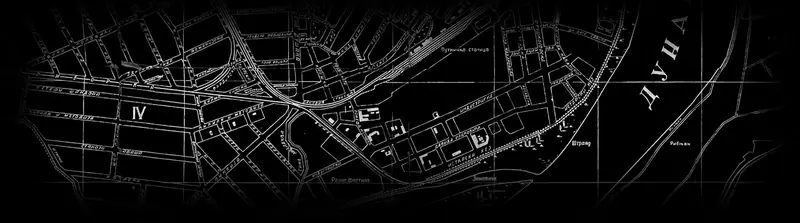
- Timeline. 53 entries from 1694 to 1946, from the bridgehead the town grew from to the Marshal Tito Bridge, built in 160 days.
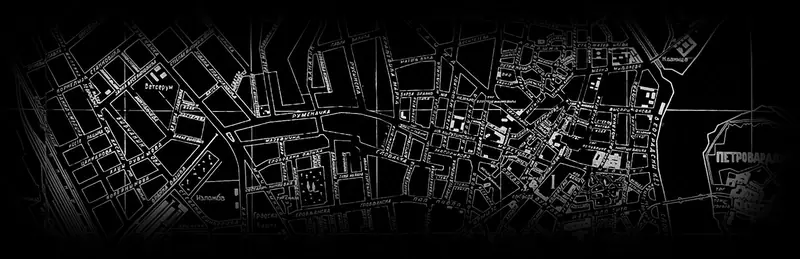
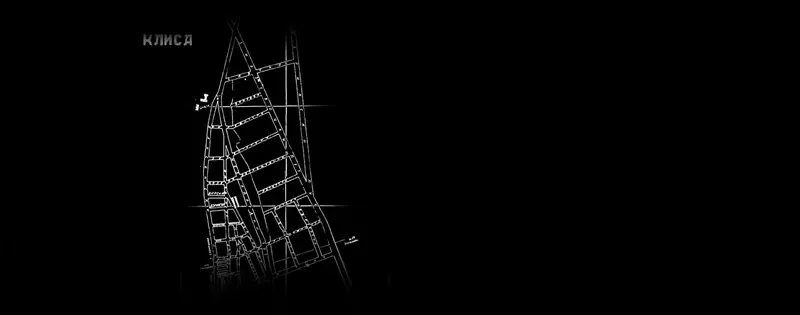
- Map. The Map of Neusatz holds 53 places in three layers: boroughs, curiosities and crews.
- Gallery. The Neusatz Archive opens inside the site.
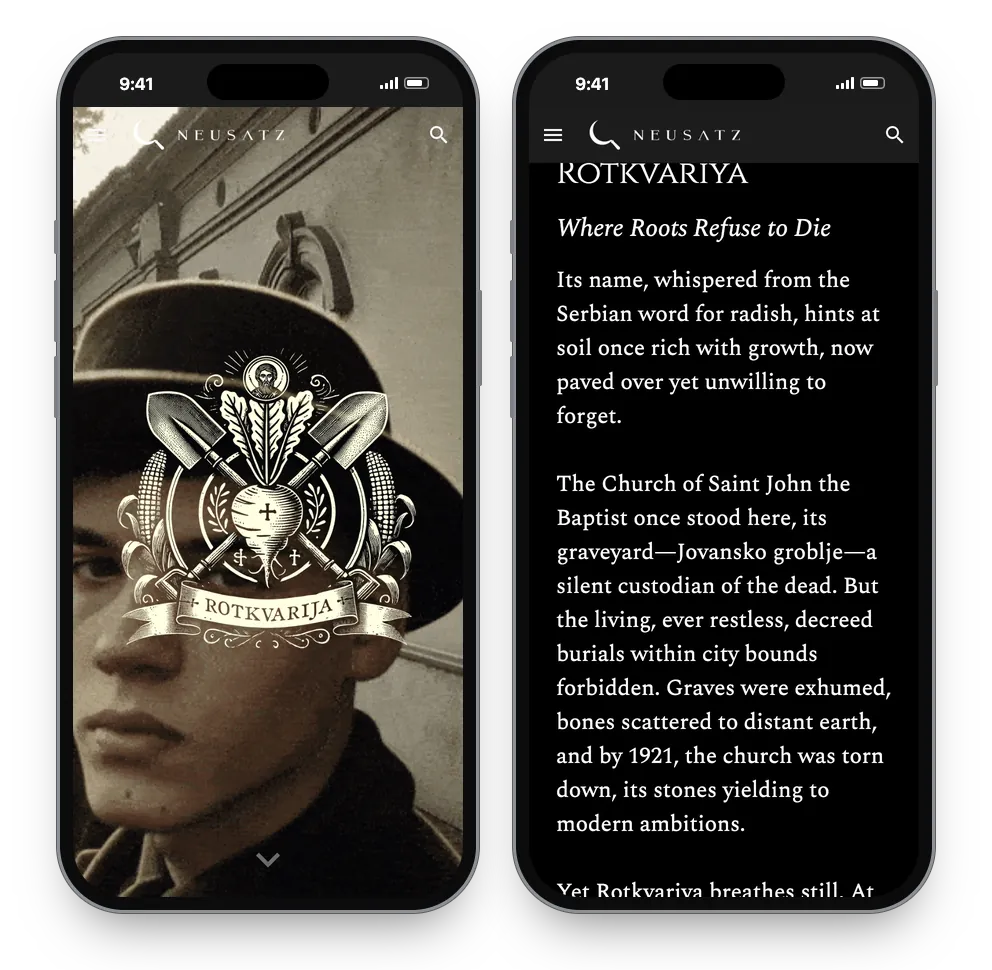
Rotkvariya on a phone: its crest over a moving photograph, then its story.
Three kinds of truth
Every page mixes three materials, and each follows its own rule. The record, meaning dates, names, streets and buildings, is exact. Memory is what someone from the neighbourhood knows, such as the barrels of carbide set off in Klisa on Orthodox Christmas Eve, and it is always particular. Legend is credited to the town with "some say" or "the story goes", and the narrator never confirms it.
Rotkvariya's page opens on the record: its name comes from the Serbian word for radish, and its church was torn down by 1921. It ends on the image the name gives it: the radishes are long gone, and the roots run deep.
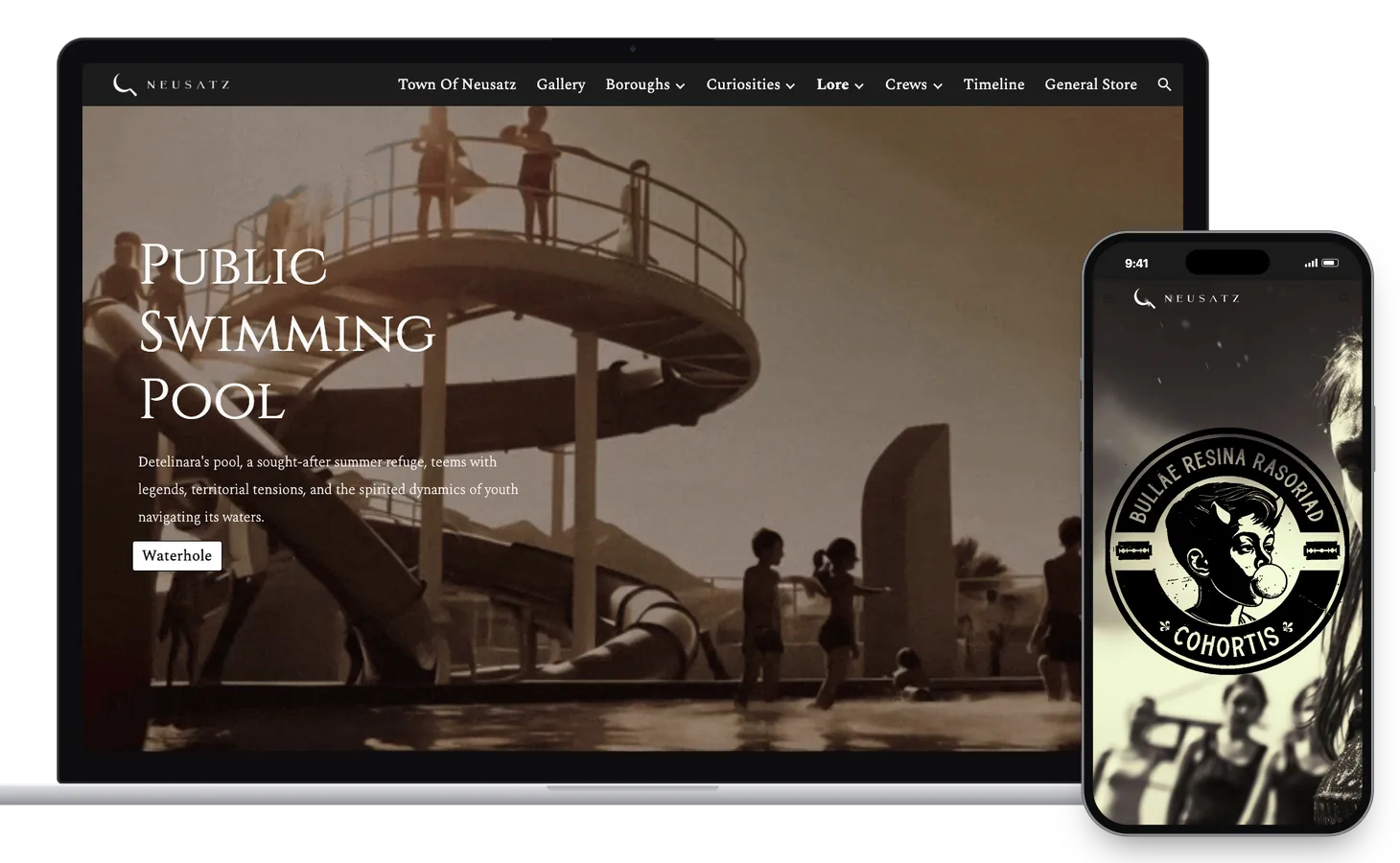
The Public Swimming Pool in Lore, whose legend has razors stuck to the slide with bubblegum, and the badge of the Bubble Razors, the crew blamed for it.
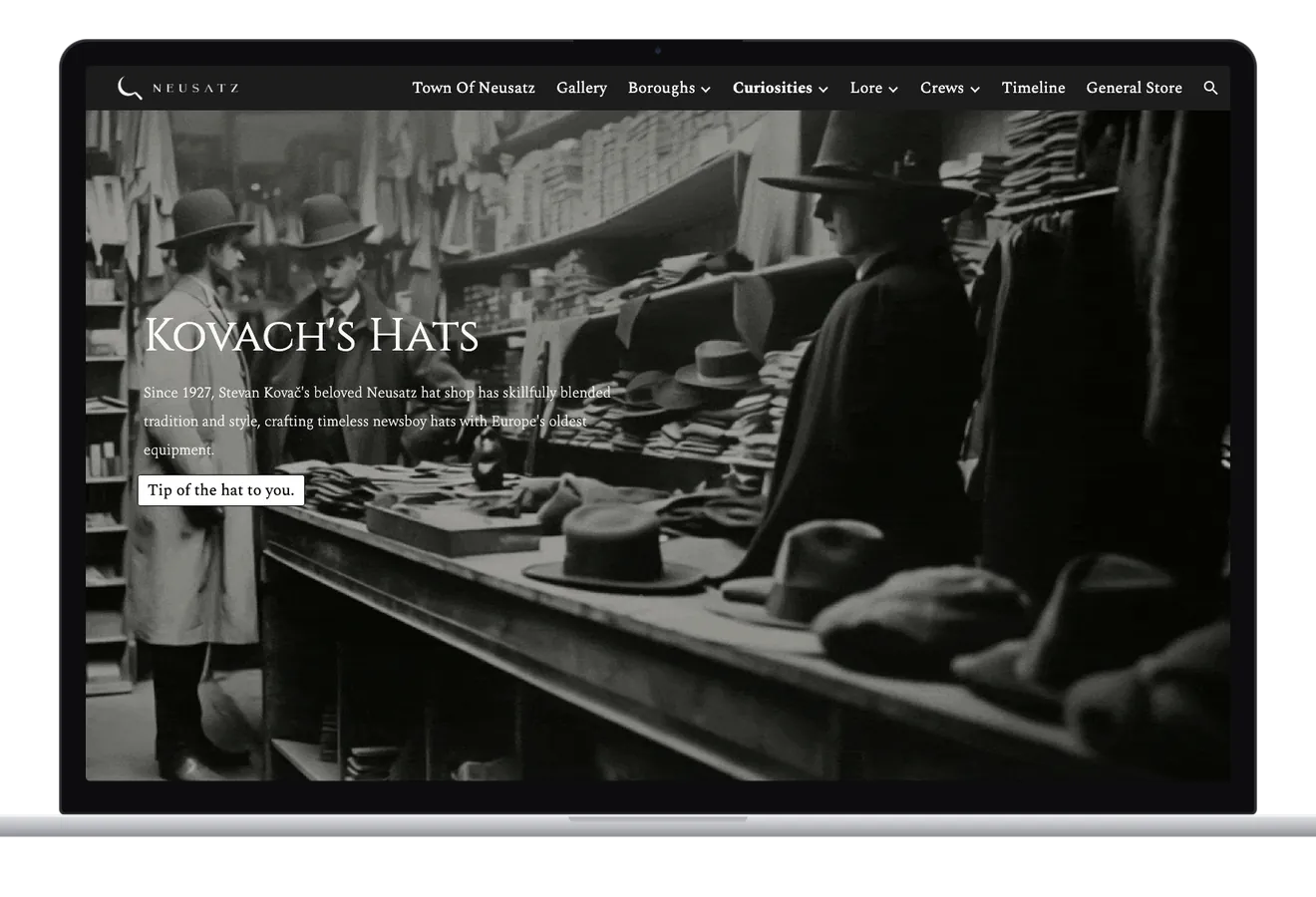
A curiosity is a real place: Kovach's Hats, opened by Stevan Kovač in 1927.
My role
Neusatz is my own project, and I own it end to end: the idea, the world and its rules, the crests, the art direction and the website. I founded it, designed the heraldry, art-directed the pictures, and designed and built the site.
How it was made
My tools were Adobe Illustrator, Photoshop and After Effects, Midjourney and ChatGPT. Many of the scenes behind the pages are animated, so a page often opens on a moving photograph.
The site runs on Google Sites. Two parts sit inside its pages from elsewhere: the timeline is a separate web app, and the Map of Neusatz is a Google My Maps map with its places sorted into boroughs, curiosities and crews. Every page ends on the same footer: a strip of the twelve crests and the fiction notice, signed by the Propaganda Department, 2024 AD.
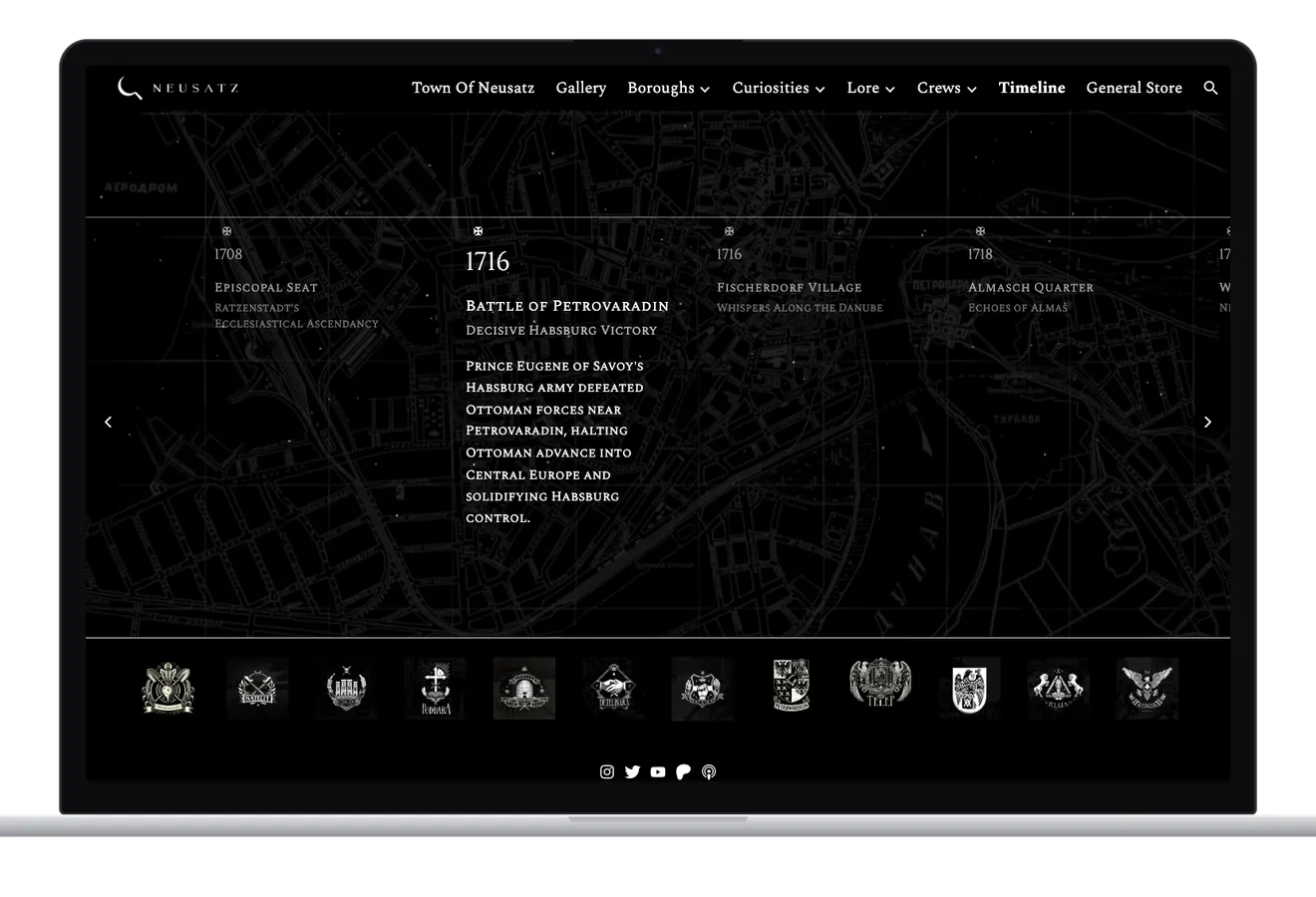
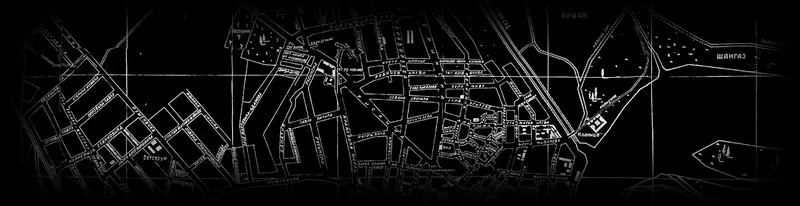
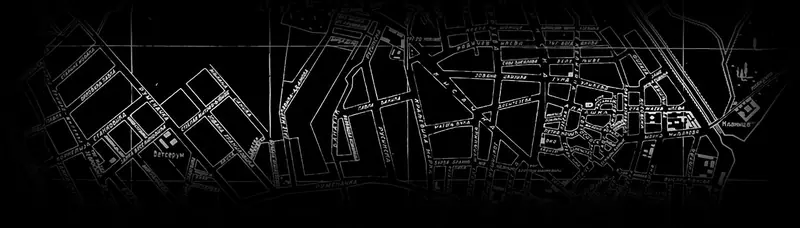
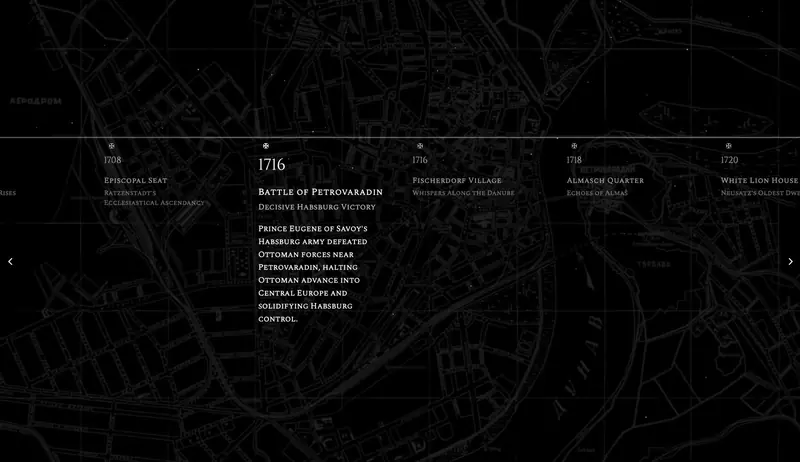
The Timeline: 53 entries over a street map of the city, here the Battle of Petrovaradin in 1716.
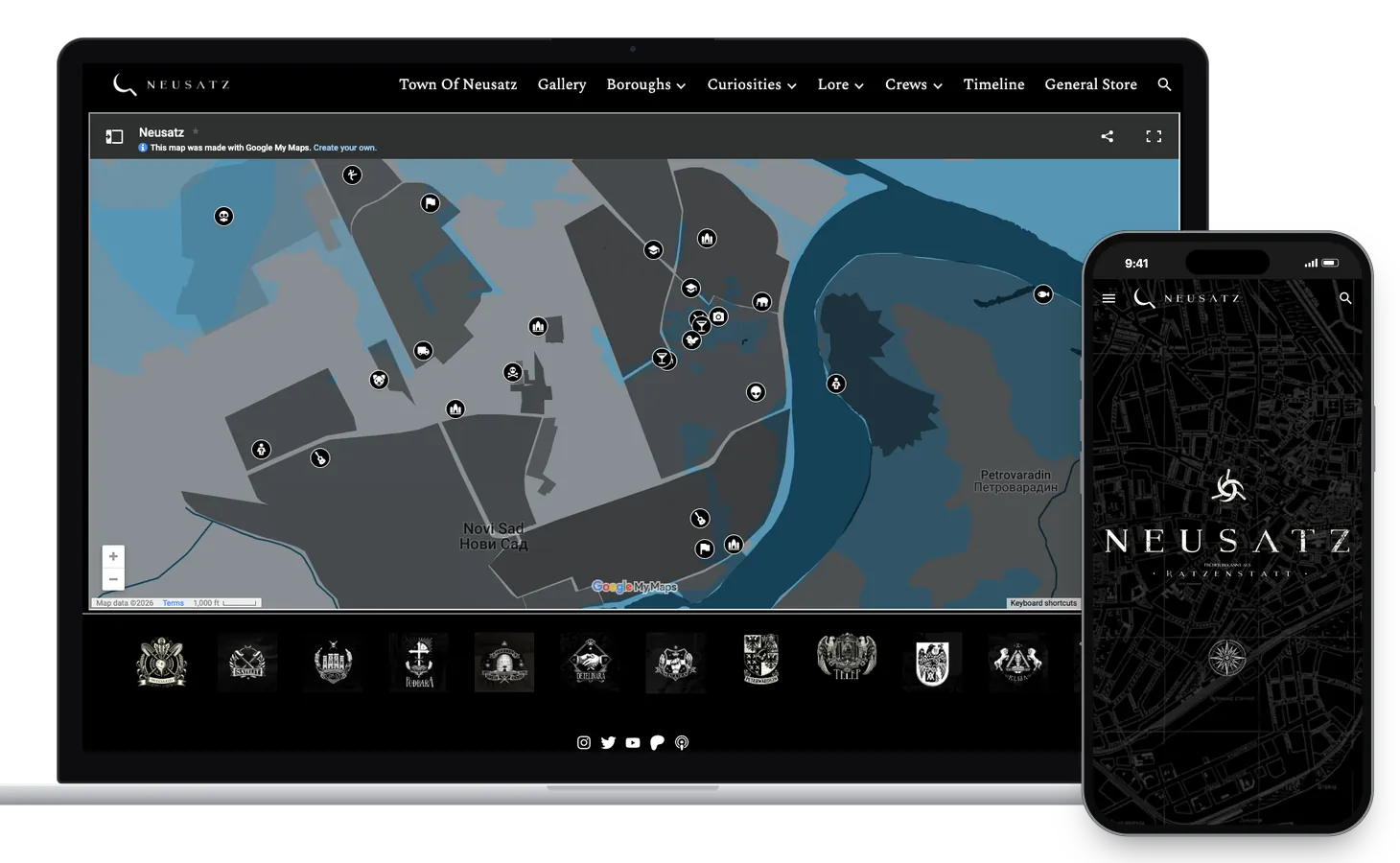
The Map of Neusatz on a laptop, and on a phone the map's title page: Neusatz, formerly known as Ratzenstatt.
A written voice
In October 2026 I had every text on the site collected and measured: 14,772 words across 59 pages, plus the timeline and the map. The newest pages set the standard. Their habits became a style guide that every new Neusatz text follows, from site pages to card lines in Neusatz Monopoly and film descriptions.
Its rules are concrete. Open on the subject and one hard fact. Take each metaphor from the place's own material. End on an image or a warning. Ration the mood words, because whisper, shadow and echo had turned up about once every hundred words. Keep real atrocity out of legend: tell the raid of January 1942 as plain record, with names, numbers and dates, and no ghosts.
In numbers
- The project has run since 2015, from a set of crests to a whole fictional city.
- Twelve boroughs each carry their own crest.
- The site holds fourteen curiosities, thirteen stories of lore and eight crews.
- The timeline has 53 entries, from 1694 to 1946.
- The Map of Neusatz places 53 locations in three layers.
- In October 2026 the site held 14,772 words across 59 pages.
Part of Neusatz
This site is the fiction side of Neusatz. Its factual side is the Neusatz Archive, which the site's Gallery opens in place. The same world carries on in Neusatz Monopoly, a board game, and in a series of short films.
Gallery

Details
- About
- A fiction site about the boroughs, lore and crews of Neusatz.
- Years
- Since 2015
- Location
- Serbia, Worldwide
- Tools
- Adobe Photoshop, Adobe Illustrator, Adobe After Effects, Midjourney, ChatGPT, Procreate
- Fields
- Art Direction, Illustration, Creative Direction
- Website
- neusatz.cc
- Tags